SVG Integration in Android Studio

Tutorial about how to integrate SVG file in Android Studio.
Open Android Studio and create a project (see here how). Application namefor this example is SVG.
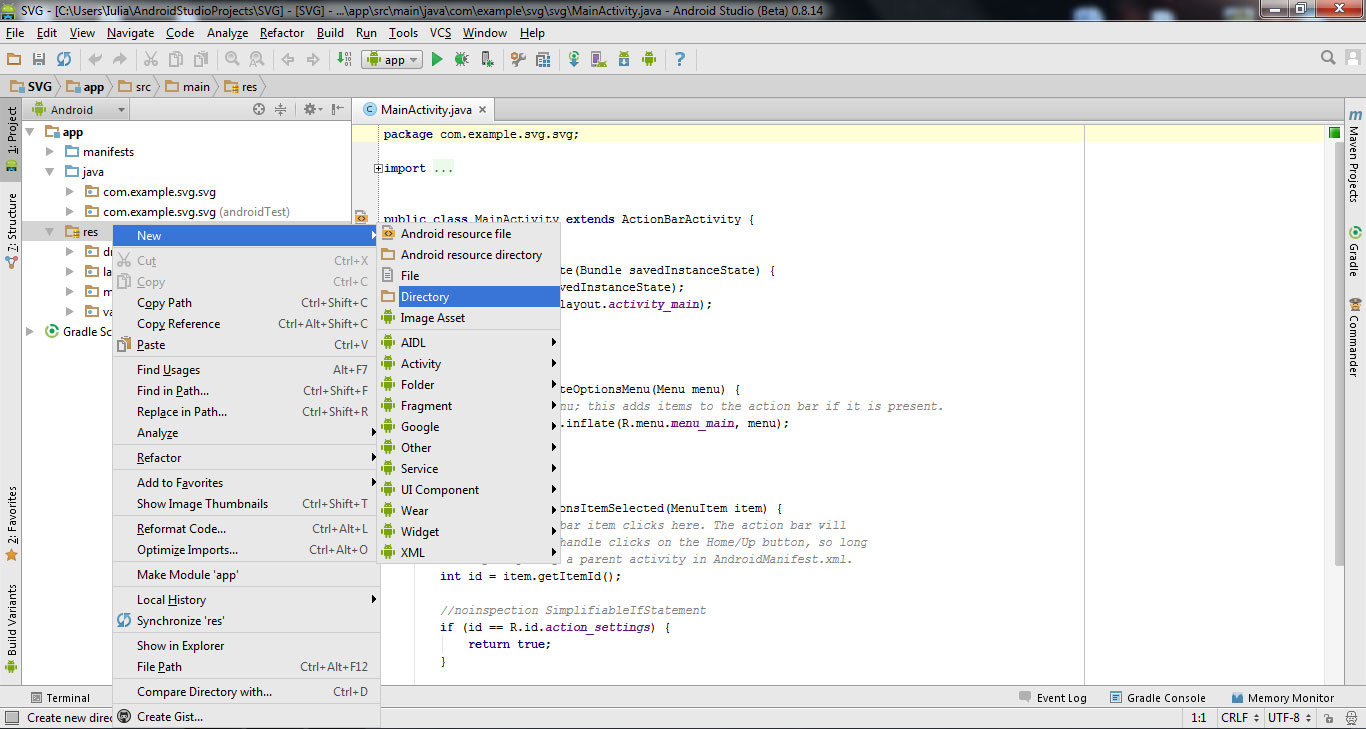
In project structure in app -> res  right click  -> New -> Directory create New Directory.
Integrate SVG in Android Studio 1
Name New Directoryraw.
Integrate SVG in Android Studio 2
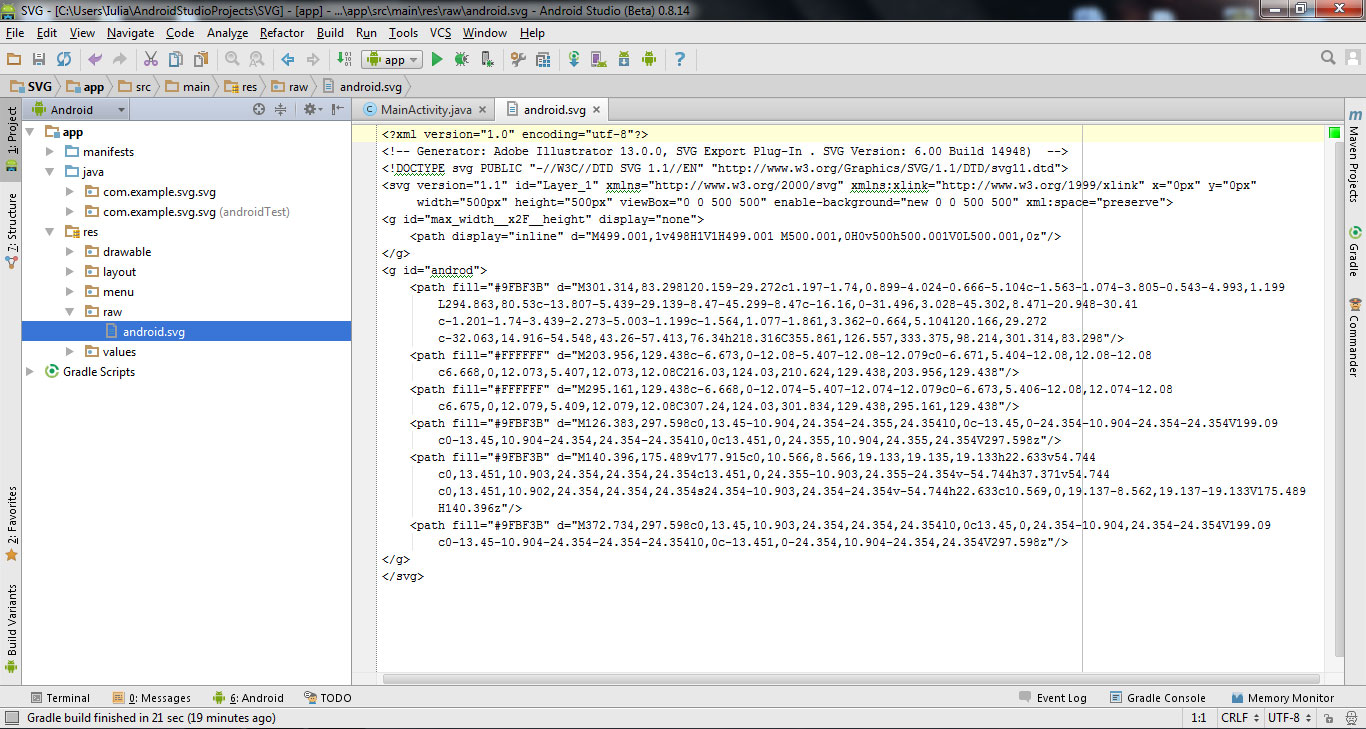
Click here to download the archive with SVG fileUnzip the archive and put the file android.svg (with copy-pastein the newly created folder raw.
Integrate SVG in Android Studio 3
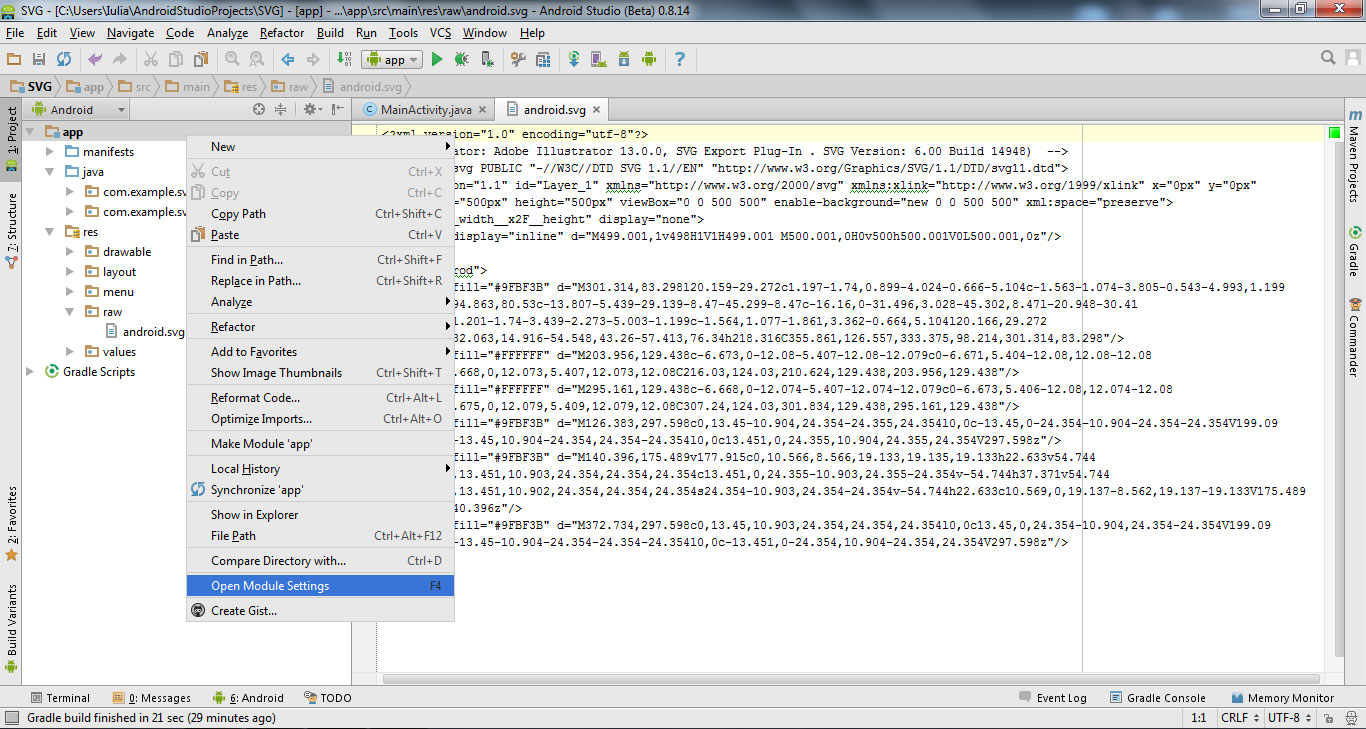
Click here to download the jar file and put it (with copy-pastein the libs folderof our project. Right click on app folder of project and choose Open Module Settings.
Integrate SVG in Android Studio 4
Click on Dependencies tab, click on + and choose File dependency.
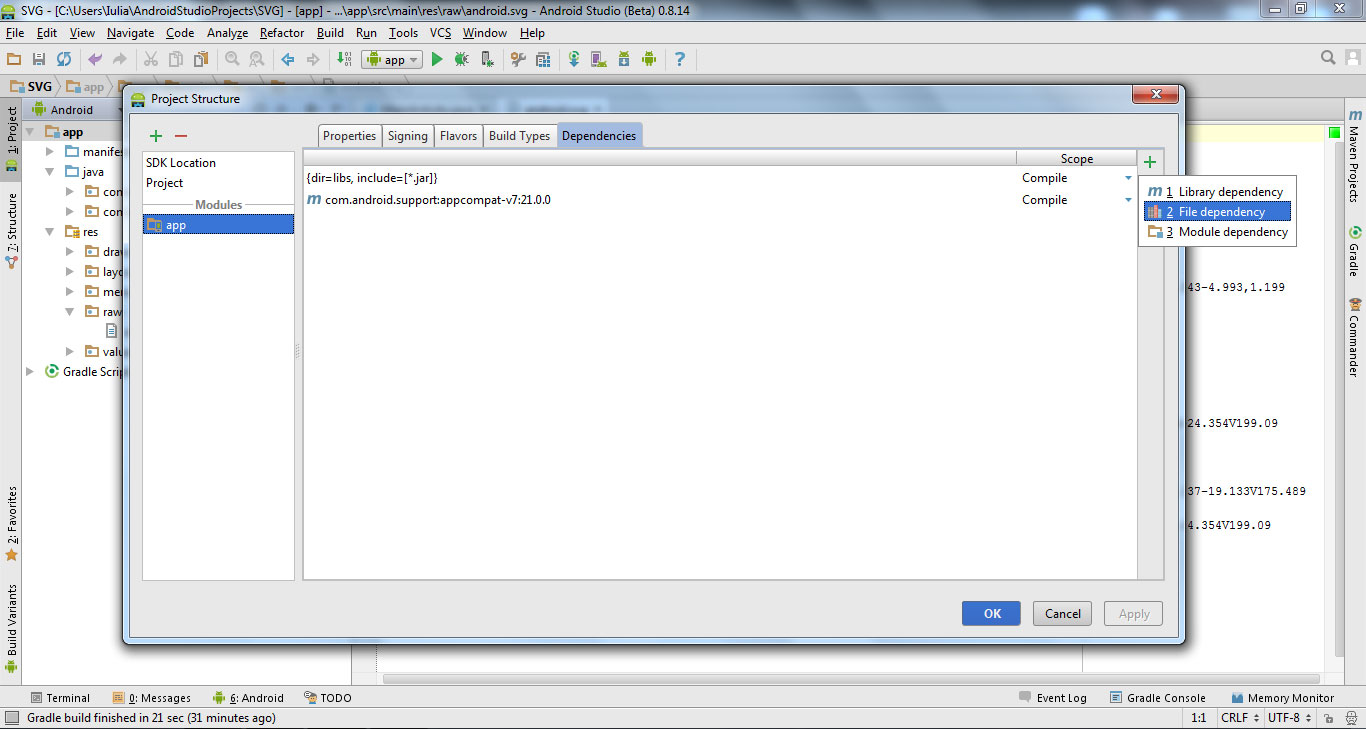
Integrate SVG in Android Studio 5
Write the path of downloaded svg-android.jar.
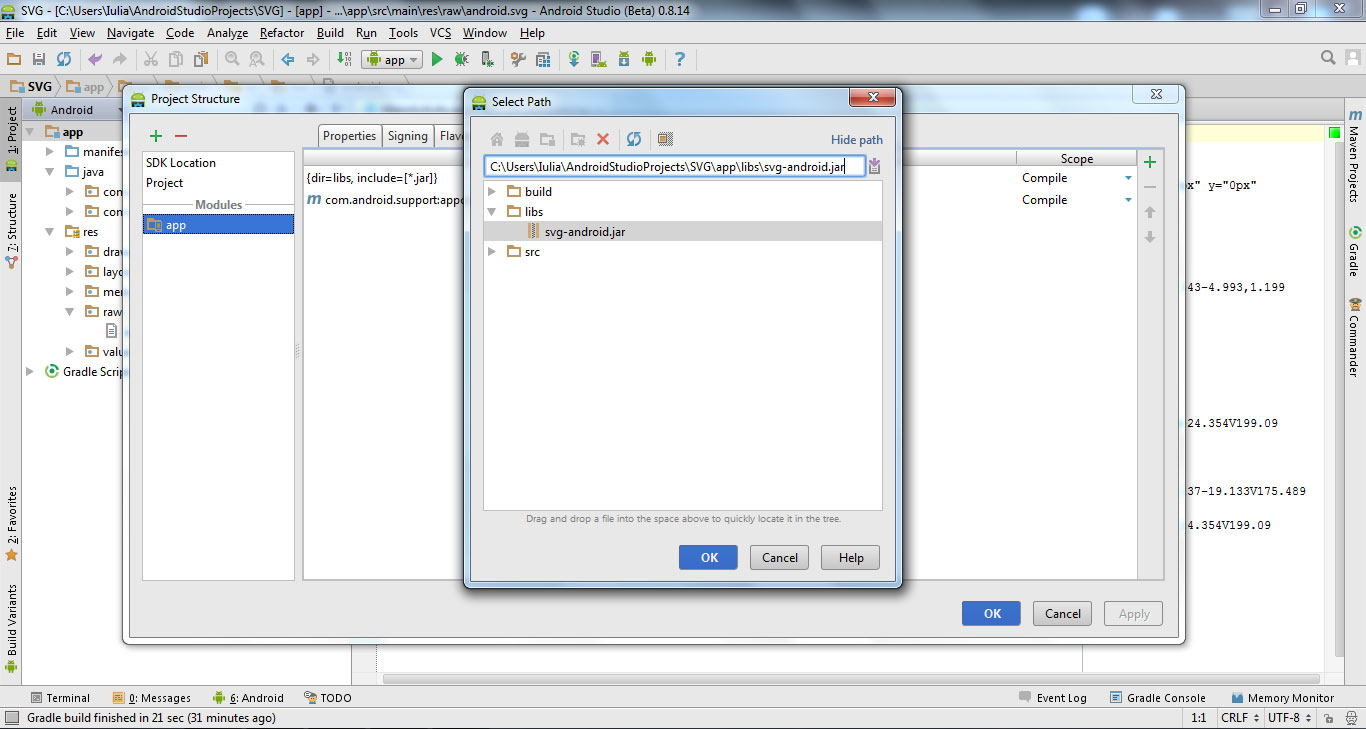
Integrate SVG in Android Studio 6
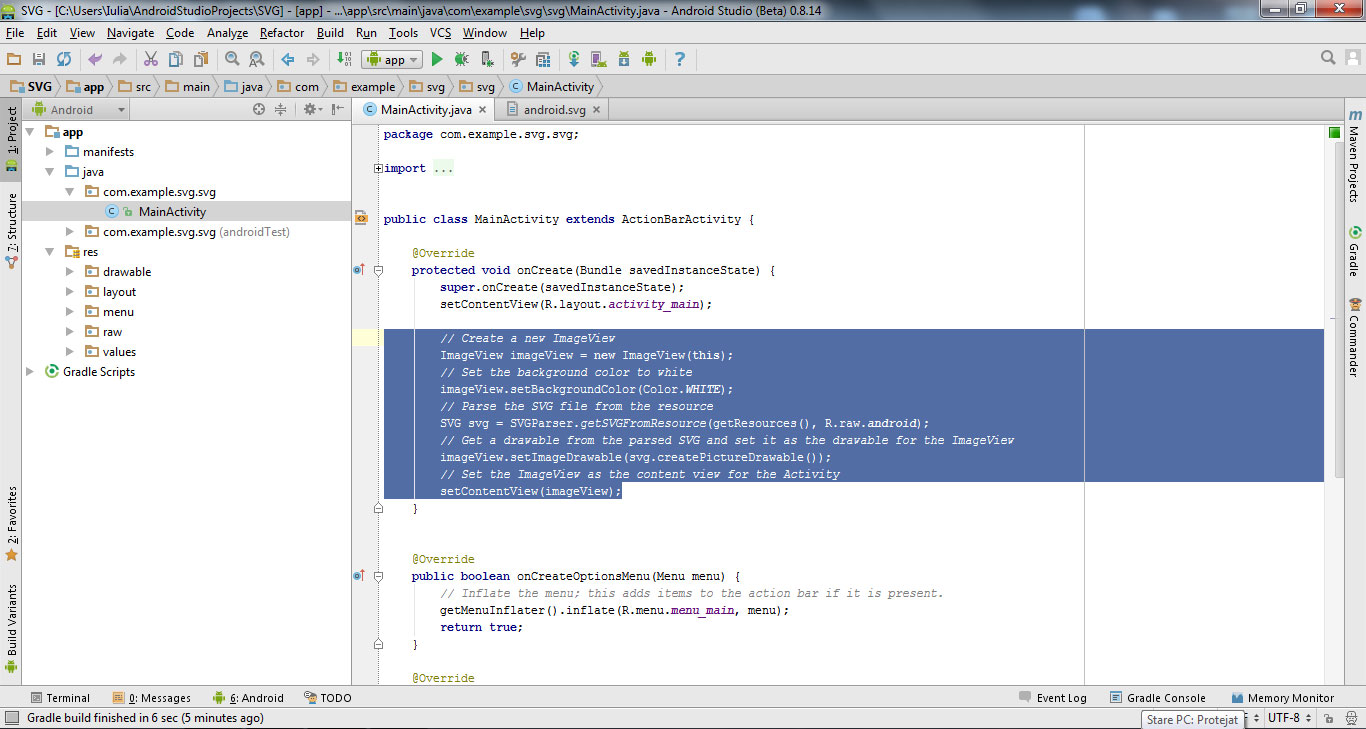
In app -> java ->MainActivity.java file write the following code:
        // Create a new ImageView
        ImageView imageView = new ImageView(this);
        // Set the background color to white
        imageView.setBackgroundColor(Color.WHITE);
        // Parse the SVG file from the resource
        SVG svg = SVGParser.getSVGFromResource(getResources(), R.raw.android);
        // Get a drawable from the parsed SVG and set it as the drawable for the ImageView
        imageView.setImageDrawable(svg.createPictureDrawable());
        // Set the ImageView as the content view for the Activity
        setContentView(imageView);
Click on each of the words in red and press Alt + Enter.
Integrate SVG in Android Studio 7
Run the application and see the result. The SVG file was successfully integrated.
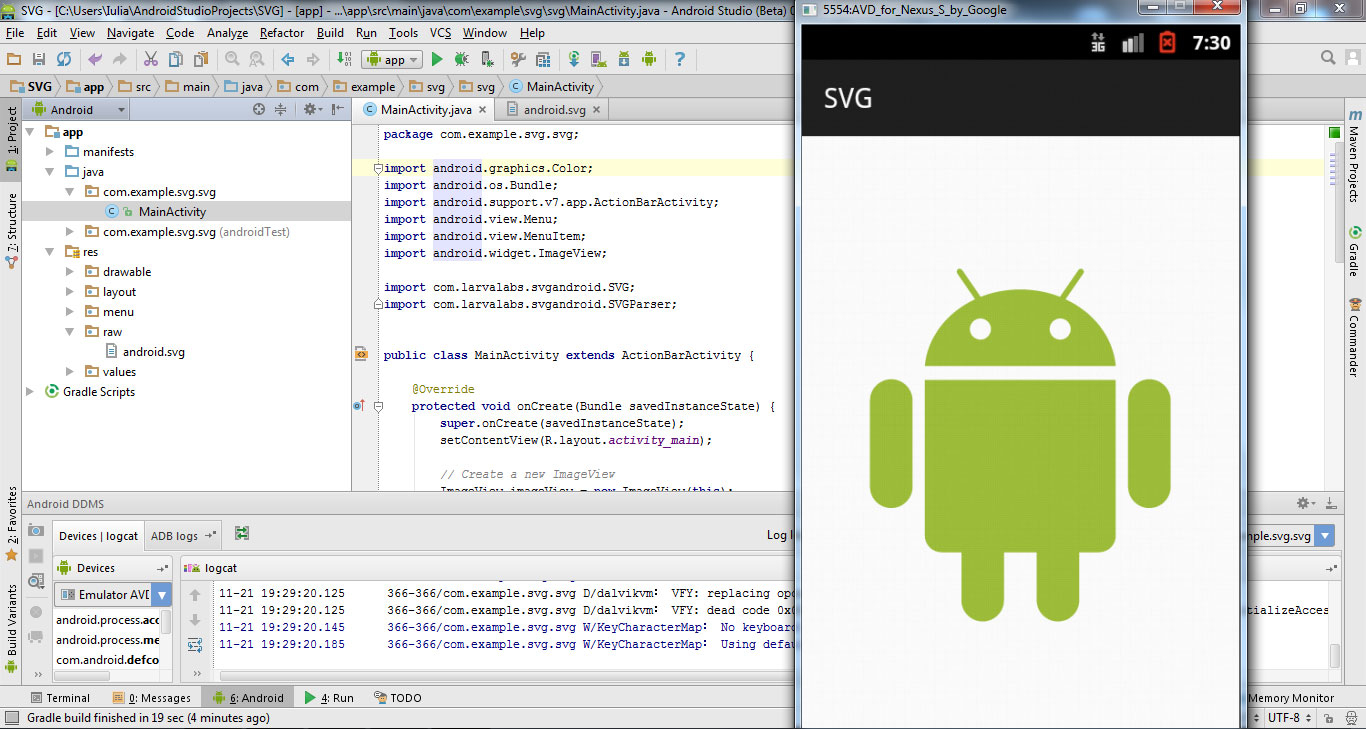
Integrate SVG in Android Studio 8
Download here the project with all files.
Download here the application for mobile phone.
Watch the video tutorial to integrate SVG file in  Android Studio:
For further questions leave a message.

Comments

Popular posts from this blog

Privacy Policy for EarnEasy Apps

  Privacy Policy for EarnEasy Apps At EarnEasy Apps, one of our main priorities is the privacy of our visitors. This Privacy Policy document contains types of information that is collected and recorded by EarnEasy Apps and how we use it. If you have additional questions or require more information about our Privacy Policy, do not hesitate to contact us. Log Files EarnEasy Apps follows a standard procedure of using log files. These files log visitors when they use app. The information collected by log files include internet protocol (IP) addresses, browser type, Internet Service Provider (ISP), date and time stamp, referring/exit pages, and possibly the number of clicks. These are not linked to any information that is personally identifiable. The purpose of the information is for analyzing trends, administering the app, tracking users' movement on the app, and gathering demographic information. Our Advertising Partners Some of advertisers in our app may use cookies and web beacons. ...

Exporting A Project To Gradle And Building/Deploying On Android Studio

Symptoms I want to export my project via Gradle and use Android Studio to build it. Cause Reasons you might want to do this include: You want to make modifications to the application in Android Studio before building it. You want full control over the build process. Resolution You need to have your Android developer environment set up before you can build your Unity application in Android Studio. This involves downloading and installing Android Studio, which also installs the Android SDK. Download Android Studio from the  Android Studio website . Next, you need to add the Android SDK path to Unity. See Unity documentation on  Android SDK/NDK setup  for steps on how to do this. Once you have your Android developer environment set up you can open your Unity Project. Note that you need to set a valid bundle identifier to be able to export an Android Project. To set this, go to Player Settings (menu:  Edit  >  Project Settings  ...